A warm, practical guide for Indian travellers planning a first trip to Thailand: how many days for Bangkok plus Phuket, Krabi and Phi Phi, the current 2026 visa and TDAC rules, the best months to go, and honest budget ranges in INR.
Thailand is the perfect first passport stamp for a lot of Indian travellers, and for good reason. It is close, it is affordable, the food is glorious, and it packs a big, buzzing city and some of Asia's best beaches into one short trip. But a first Thailand trip also throws up a lot of real questions: how many days do you actually need, do you still get in without a visa in 2026, when is the weather good, and what will it honestly cost? Here is a warm, practical, no-nonsense guide to planning that first trip.
How many days do you need?
For a first trip that mixes Bangkok with the islands, aim for 7 to 9 days on the ground. A comfortable split is 3 nights in Bangkok and 4 to 5 nights on the Andaman coast (Phuket, Krabi, or both). Anything shorter than 6 nights and you spend half your holiday in airports and transfers. If you only have a long weekend, do Bangkok and Pattaya alone and save the islands for a return trip, because Phuket and Krabi deserve unhurried days.
The visa situation in 2026 (read this carefully)
This is the part that has changed recently, so do not rely on older blogs. Indian passport holders still enter Thailand visa-free for tourism, but the generous 60-day visa-free window that ran from 2024 has been scrapped. India has instead been placed on Thailand's 30-day visa-free list, so plan your first trip around a maximum 30-day stay. The change becomes law 15 days after it is published in Thailand's Royal Gazette, and the exact date can land with little warning, so if you are booking for later in 2026, build your plans on 30 days, not 60.
Separately, every foreign visitor must now file the Thailand Digital Arrival Card (TDAC), which became mandatory from 1 May 2025. It is free, takes about 10 minutes online, and must be submitted within 72 hours before you arrive. The only official site is tdac.immigration.go.th; any site charging a fee is a scam. Immigration can also ask for a return ticket, hotel bookings, and proof of funds, so keep those handy.
File your TDAC only on tdac.immigration.go.th, and do it in the 72 hours before your flight, not weeks ahead. It is free. If a website asks you to pay for a Thailand arrival card, close the tab.
When to go
The sweet spot is November to February, the cool, dry season. On the Andaman coast (Phuket, Krabi, Koh Phi Phi, Koh Lanta) expect sunny skies, low humidity, and daytime temperatures in the low 30s Celsius, with warm sea water of roughly 29 to 30 degrees in January and February. This is also peak season, so December to early January (Christmas and New Year) is the most crowded and expensive stretch. If you want good weather with slightly softer prices, aim for November or February. The wettest months on the islands run roughly May to October.
Bangkok first
Most flights land in Bangkok, and it is a great warm-up. Give yourself the Grand Palace and the Emerald Buddha temple, Wat Phra Kaew (one combined ticket, 500 baht per person), then the reclining Buddha at Wat Pho and Wat Arun, the Temple of Dawn, just across the river. Dress modestly for temples: shoulders and knees covered. Beyond temples, Bangkok is about street food, rooftop views, the Chatuchak weekend market, and easy, cheap travel on the BTS Skytrain and river boats. Three nights is enough to enjoy it without burning out.
The islands: Phuket, Krabi and Phi Phi
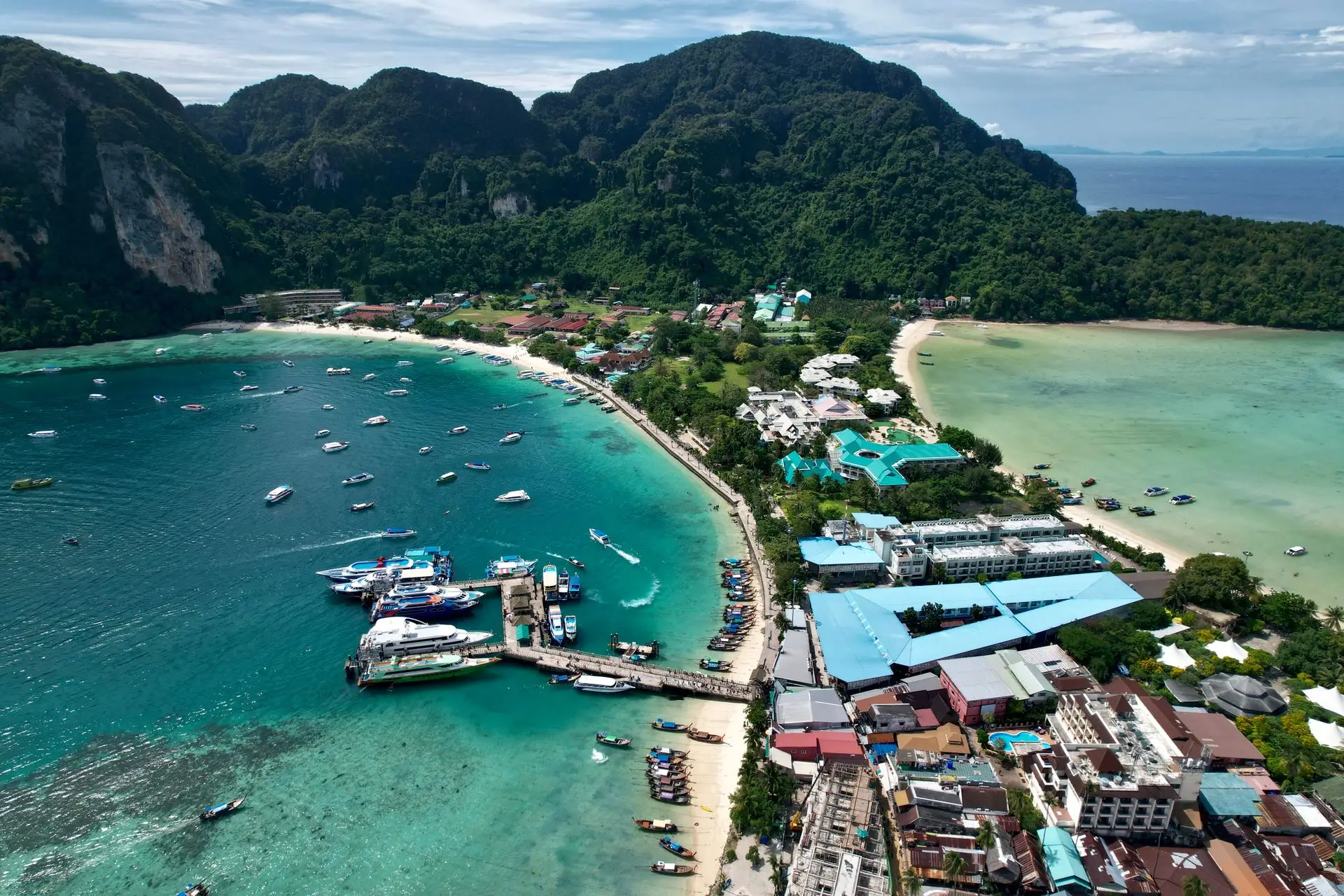
From Bangkok, a short domestic flight (roughly ₹3,000 to ₹8,000) gets you to Phuket or Krabi in about 1.5 hours. Phuket is bigger and more developed, good for first-timers who want resorts, nightlife, and easy day trips. Krabi is more laid-back and dramatic, home to the limestone cliffs of Railay, which is reachable only by longtail boat. From either base you can do the famous Phi Phi Islands day trip. Maya Bay, made famous by the film The Beach, sits on Phi Phi Leh inside Hat Noppharat Thara-Mu Ko Phi Phi National Park; the park fee is 400 baht for adults and 200 for children, it is open 7am to 6pm, and it closes fully each year from 1 August to 30 September to let the reef recover. Note that you can no longer swim in Maya Bay itself, only wade knee-deep, and boats cannot anchor on the sand.
What it roughly costs (as of 2026)
Thailand flexes to almost any budget. Return flights from India run about ₹12,000 to ₹20,000, with a flying time of just 3 to 5 hours from cities like Delhi, Mumbai and Chennai. For a 7-day Bangkok-plus-island trip, rough per-person budgets look like this.
- Budget backpacker: approximately ₹35,000 to ₹50,000 total, using hostels or basic hotels, street food, and shared transfers.
- Mid-range (most families and couples): approximately ₹65,000 to ₹95,000 total, with comfortable 3-star hotels, a mix of restaurants, and a few paid day tours.
- Luxury: ₹1,20,000 and up, for resorts, private transfers, and premium experiences.
- On the ground, budget roughly ₹500 to ₹2,000 a day for food depending on style, and ₹6,000 to ₹15,000 across the trip for activities and island tours.
A few honest first-timer tips
- Carry some Thai baht for taxis and street stalls, but cards work widely in malls and hotels.
- Use metered taxis or apps like Grab in Bangkok rather than negotiating tuk-tuk fares for long trips.
- Book Phi Phi and island tours a day or two ahead in peak season; the good boats fill up.
- Pack light, quick-dry clothes, reef-safe sunscreen, and a modest outfit for temple days.
- Keep digital and printed copies of your return ticket, hotel bookings, and TDAC confirmation.
A first trip to Thailand is genuinely one of the easiest big adventures an Indian traveller can take, and it is even easier when the flights, hotels, transfers, island tours and paperwork are all lined up for you. If you would like a Bangkok-and-islands itinerary shaped around your dates, budget and travel style, message the Croudy Trips team on WhatsApp or give us a call, and we will help you plan it end to end.